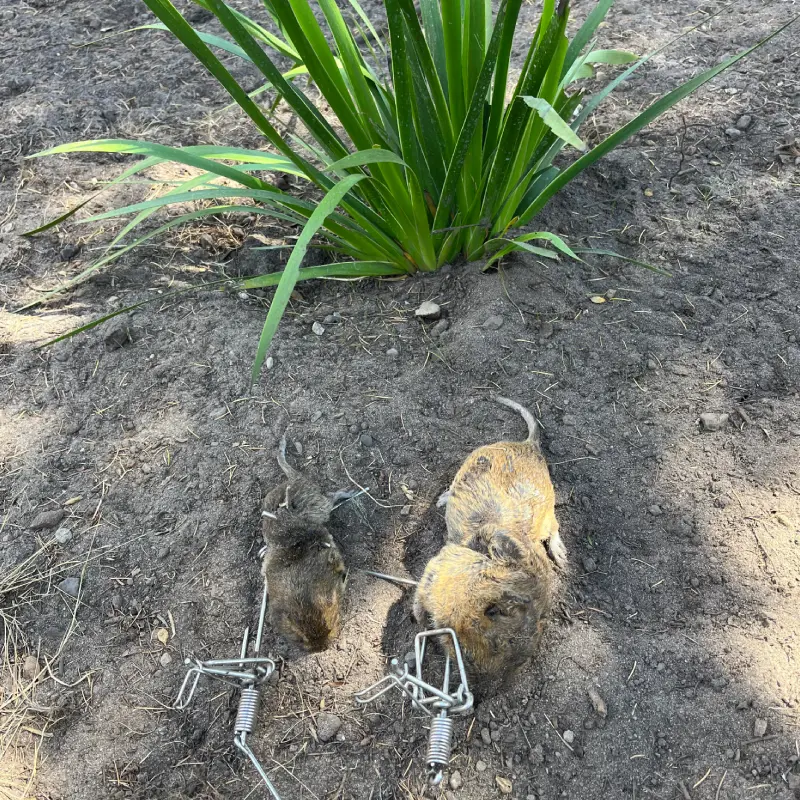
The clearest signs you need vole control include narrow surface runways, open burrow entrances, clipped vegetation, chewed bark, damaged roots or plants, and repeated vole activity. Because several rodents can cause similar damage, confirming that voles are responsible is important before choosing a control method.
In this article, you’ll learn how to identify vole infestation signs, recognize common damage patterns, and understand the benefits of professional vole removal services.
It is important to confirm that voles caused the damage. Homeowners sometimes mistake voles for pocket gophers, moles, or house mice.
How Do You Identify a Vole?
The most common voles belong to the Microtus genus and are often called meadow mice. Despite the nickname, they are different from true mice. Voles have short tails, stocky bodies, and small, partially hidden ears.
Here are some key characteristics that can help you recognize them:
- Size: Most adult voles are about 4 to 7 inches long, including the tail.
- Tail Length: Their tails are short, usually around 1 inch or much shorter than a mouse’s tail.
- Fur Color: Gray, grayish-brown, or dark brown fur with a lighter underside.
- Body Shape: Compact, stocky body with short legs.
- Key Features: Small eyes, partially hidden ears, and a rounded or blunt-looking nose.
- Surface Habits: They create narrow runways through grass and ground cover instead of making large dirt mounds.
- Seasonal Habits: Voles stay active year-round and do not hibernate.
7 Key Signs You Need Vole Control to Protect Your Landscape
Now that you know how to identify a vole, learning to spot signs of vole activity can help you determine whether your property has an active problem. Here are some common signs to look for:
1. Surface Runways & Grass Tracks
One of the clearest signs of voles in your yard is a network of narrow pathways running through grass, mulch, or ground cover. Voles repeatedly travel between feeding and nesting areas, which can create visible track patterns.
Surface runways may become more noticeable when vegetation is flattened or when surrounding plant growth is reduced.
What signs to look for:
- Narrow grass tracks
- Flattened vegetation across the lawn
- Visible pathways under mulch
- Connected travel routes between plants
- Repeated tracks leading to shrubs or trees
2. Spongy or Sunken Lawn Areas
Voles create shallow tunnel systems near the soil surface. Their activity can affect vegetation and the soil around established runways, potentially creating areas of uneven lawn or damaged turf.
Parts of the lawn may feel softer when walked on or develop shallow depressions, particularly around active areas.
What signs to look for:
- Spongy patches in turf
- Small sunken lawn sections
- Loose grass around tracks
- Uneven ground near runways
- Turf that feels unstable underfoot
3. Chewed Tree Bark & Shrub Girdling
Voles can feed on the softer bark of young trees and the base of shrubs. The damage often occurs at or near the soil line.
When voles chew completely around a trunk or shrub, the process is called girdling. This stops food and water from moving up from the roots, which quickly kills the entire tree or bush.
What signs to look for:
- Missing bark around tree bases
- Irregular chewing marks at ground level
- Damaged shrub stems
- Exposed inner wood near roots
- Partial or complete girdling around trees or shrubs
4. Damaged Garden Crops & Eaten Bulbs
Voles are plant-eating rodents that may feed on roots, seeds, garden vegetables, bulbs, and other plant material.
Vole activity can damage root crops and garden plants before you notice the animals themselves.
What signs to look for:
- Damaged flower bulbs or roots
- Chewed roots of carrots, beets, and potatoes
- Garden vegetables showing small teeth marks near the soil
- Young garden plants disappearing or falling over
- Chewed plant stems along garden borders
5. Small Open Entrance Holes
Vole burrows can lead to underground nesting and shelter areas. Unlike pocket gophers, which are commonly associated with noticeable soil mounds, vole activity may be associated with small open burrow entrances connected to surface runways.
Because these openings can be small and hidden near dense vegetation or lawn runways, look closely along grass tracks and garden borders.
What signs to look for:
- Small open burrow entrances
- No prominent dirt mounds around the openings
- Holes connected to surface runways
- Multiple openings in one area
- Entrances hidden beneath vegetation
6. Discarded Grass Piles & Clippings
Voles can clip grass stems and other vegetation while feeding along their usual travel routes. Freshly clipped vegetation can indicate recent vole activity, particularly when the clippings appear along runways or near burrow openings.
What signs to look for:
- Small piles of clipped grass
- Fresh plant cuttings near runways
- Gathered stems under shrubs
- Grass fragments along pathways
- Evidence of repeated feeding activity
7. Increased Vole Sightings or Pet Activity
Voles can be difficult to spot because they spend much of their time moving through vegetation and runways. If you repeatedly see small rodents in the same lawn or garden areas, or your pets repeatedly investigate specific runways, look for additional signs such as clipped vegetation, burrow openings, and plant damage.
Dogs and cats may repeatedly sniff, dig, or focus attention on the same lawn areas where voles are active.
What signs to look for:
- Frequent vole sightings
- Pets focused on lawn tracks
- Repeated digging by dogs
- Movement within dense grass
- Activity near shrubs and mulch beds
You may find this helpful: Signs You Need Ground Squirrel Control
When Should You Call a Professional Vole Control Service?
Consider professional vole control services when you notice persistent activity or damage that is becoming difficult to manage on your own.
- You see repeated vole activity in the same areas.
- Surface runways are spreading across your lawn.
- Voles are damaging young trees, shrubs, or garden plants.
- DIY control has not reduced the activity.
- You cannot determine whether the damage is caused by voles, moles, or pocket gophers.
- The infestation is affecting a large area of your property.
- You want help identifying active runways and choosing an appropriate control method.
Benefits of Professional Vole Exterminator Services
Many homeowners try to get rid of voles on their own. However, DIY efforts may not address the full extent of an infestation, particularly when voles are using connected runways and hiding in dense vegetation.
A professional vole control service can use a targeted approach to locate active areas and develop an appropriate control strategy. Some potential benefits include:
- Full Yard Inspection: Technicians check your property for active holes, surface runways, plant damage, and other signs of vole activity.
- Locate Active Runways: Professionals identify areas where voles are actively traveling so control efforts can be focused appropriately.
- Custom Removal Plan: A control strategy can be tailored to the size of your yard, level of activity, and affected areas.
- Appropriate Treatment Methods: Treatment methods can be selected based on the property, level of activity, and applicable safety requirements.
- Follow-Up Visits: Follow-up inspections or treatments may be recommended depending on the level of vole activity.
- Prevention Advice: You can receive recommendations for reducing habitat and conditions that may encourage future vole activity.
Vole Prevention Tips for Homeowners
After addressing an active vole problem, homeowners can use habitat-management practices to make their property less attractive to voles and reduce the risk of future activity.
Remove Food & Cover
Remove sources of food and shelter that may attract rodents. Get rid of fallen fruit as soon as it drops, reduce birdseed spills under feeders, remove heavy thatch buildup from your lawn, and keep weed growth under control.
Adjust Habitat
Mow lawns regularly to keep grass short and reduce dense ground cover. Pull mulch away from tree trunks and keep vegetation trimmed. These steps can help limit the cover voles use for protection and travel.
Install Underground Barriers
Physical barriers can help protect sensitive root zones, gardens, and planting beds. Hardware cloth or wire mesh can be used where appropriate, along with mesh cylinders to protect valuable young trees.
Clear Dense Brush
Trim low shrubs, remove overgrown vegetation, and reduce hiding areas around your property. Managing dense vegetation can help reduce the shelter available to voles and other pests.
Habitat management is an important part of long-term prevention because voles can benefit from areas that provide food, cover, and protection. These preventive steps can help reduce vole damage to plants and the need for frequent vole control for lawns.

Protect Your Property With Professional Vole Control
Vole activity can damage lawns, gardens, trees, and other landscaping. Learning the signs you need vole control can help you identify an active problem before the damage becomes more extensive.
At The Gopher Guys, we provide reliable vole control services near Salinas. Our experienced team uses practical methods and professional equipment to manage vole activity and help protect your property.
If you are seeing surface runways, open burrow entrances, plant damage, or repeated vole activity, contact our team to discuss the signs you’re seeing and determine the appropriate next step.
Call The Gopher Guys at (669) 225-5823 to learn more about professional vole removal.
FAQs
Should I fill vole holes?
Filling a vole burrow does not address the underlying infestation. First determine whether the burrow is active and address the vole activity. Once the activity has been controlled, you can repair damaged areas and refill visible holes as needed.
How much does vole control cost?
The cost of vole control varies depending on the size of the property, level of activity, affected areas, and control approach. A professional inspection can help determine the scope of the problem and the appropriate service.
Are voles active year-round?
Yes. Voles do not hibernate and can remain active throughout the year. Their activity and visible damage can vary depending on vegetation, food availability, weather, and local conditions.
How deep are vole tunnels?
Vole pathways and burrows are generally shallow and often occur close to the soil surface. Surface runways and small burrow openings can be useful indicators when looking for vole activity.
How long does professional vole control take?
The timeline depends on the number of voles, the size of the affected area, accessibility, and the control method used. Some infestations may require follow-up visits to monitor activity and address remaining voles.